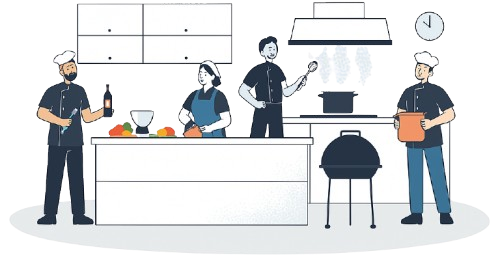
Starting a food business is a dream for many aspiring entrepreneurs. Whether you’re planning to open a restaurant, café, cloud kitchen, or fast-food outlet, one question always comes first: How to start a food business without taking unnecessary financial risks?
Start Your Food Business with a Practical Budget
The answer is simple—start smart, not expensive.
Many first-time business owners believe they need a luxurious interior, expensive furniture, and a fully equipped kitchen from day one. While these things can improve the customer experience later, they are not the foundation of a successful food business.
The real foundation is delicious food, consistent quality, proper hygiene, and smart business planning.
One of the biggest food business tips is to control your initial investment.
Instead of spending most of your budget on decoration, focus on purchasing only the essential equipment needed to prepare and serve quality food. A well-planned kitchen with the right tools is more valuable than a beautiful dining area that leaves no budget for daily operations.
A low investment food business reduces financial pressure. If customer growth takes time, your business will still have room to adapt without carrying unnecessary expenses.
Food Quality Should Always Be Your First Priority
Customers may visit your restaurant because of attractive branding, but they return because of the food.
If you’re learning how to start a food business, remember that quality ingredients are an investment—not an expense.
Always choose:
- Fresh vegetables and ingredients
- Premium-quality cooking oil
- Reliable food-grade storage containers
- Professional commercial kitchen equipment
- Consistent recipes and cooking methods
Excellent taste creates loyal customers, and loyal customers build long-term businesses.
Hygiene Builds Trust Faster Than Advertising
No marketing campaign can replace customer trust.
A clean kitchen, sanitized equipment, proper food storage, and hygienic food preparation create confidence among customers. In today’s competitive hospitality industry, hygiene is one of the strongest reasons customers recommend a restaurant to others.
Whether you’re running a small café or a cloud kitchen, maintaining cleanliness should never be optional.
Don’t Buy Everything on Day One
Many entrepreneurs make the mistake of purchasing every machine available before their business has even opened.
Instead, invest only in equipment that supports your daily operations.
As your orders increase and revenue becomes stable, you can gradually expand your kitchen by adding:
- Commercial Atta Machines
- Stainless Steel GN Pans
- Bain Marie Counters
- Display Counters
- Commercial Wet Grinders
- Commercial Mixers
- Dosa Bhatti
- Refrigeration Equipment
This approach helps you grow your business without unnecessary financial pressure.
Choose the Right Commercial Kitchen Equipment
Good equipment improves efficiency, saves time, and maintains food consistency.
When selecting commercial kitchen equipment, always consider:
- Food-grade stainless steel construction
- Easy maintenance
- Energy efficiency
- Capacity based on your daily production
- Long-term durability
Buying quality equipment once is often more cost-effective than replacing cheaper alternatives repeatedly.
Build Your Brand Before Expanding
A successful restaurant isn’t remembered because it had expensive interiors on its opening day.
It’s remembered because customers enjoyed the food, appreciated the cleanliness, and trusted the service.
Once your business begins generating consistent revenue, you can confidently invest in interior design, larger kitchen capacity, advanced equipment, and additional staff.
Growing step by step is one of the smartest strategies for building a sustainable food business.
Final Thoughts
If you’re wondering how to start a food business, don’t focus on spending the most money—focus on making the smartest decisions.
Prioritize food quality, maintain excellent hygiene, control your initial investment, and expand your business only when demand grows.
Strong planning today creates a stronger business tomorrow.
If you’re looking for reliable commercial kitchen equipment for restaurants, cafés, hotels, cloud kitchens, or catering businesses, explore the professional hospitality solutions available at The Imperial Hospitality.